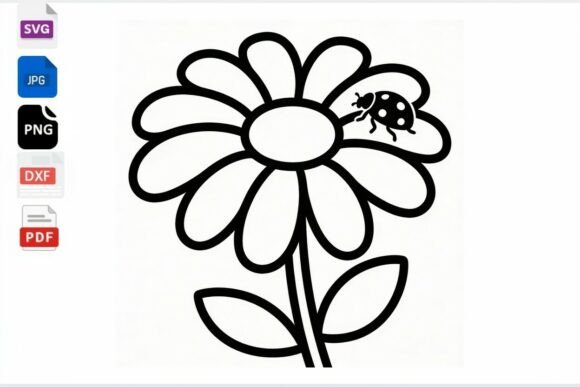
Daisy Flower Ladybug Outline SVG Clipart: A Creative Tool for Every Crafter
The Daisy Flower Ladybug Outline SVG Clipart is a versatile digital design that opens up a world of creative possibilities for crafters, designers, and hobbyists. Whether you're looking to personalize apparel, create custom home decor, or add unique touches to your DIY projects, this clipart offers a clean, elegant outline that can be easily adapted to suit your needs. With its availability in multiple formats—SVG, EPS, JPG, PNG, PDF, and AI—it ensures compatibility with a wide range of software and tools, making it accessible to both beginners and seasoned professionals.
Why Choose the Daisy Flower Ladybug Outline SVG Clipart?
This clipart stands out due to its simplicity and precision. The daisy flower and ladybug design is not only visually appealing but also highly adaptable. Its outline style allows for easy customization, whether you're using it as a stencil, a pattern, or a base for more complex designs. The clarity of the lines makes it ideal for printing at various sizes without losing detail, ensuring consistent quality across all your projects.
Moreover, the variety of file formats means you can work with the clipart in different ways. For instance, the SVG format is perfect for use with cutting machines like Cricut or Silhouette Studio, while the PDF and PNG files are great for direct printing or digital use. The AI file provides full editability in Adobe Illustrator, giving you complete control over colors, shapes, and layouts.
Common Mistakes When Using Daisy Flower Ladybug Outline SVG Clipart
While the Daisy Flower Ladybug Outline SVG Clipart is a powerful tool, there are several common mistakes that users often make. One of the most frequent errors is not checking the file's compatibility with their preferred software. Many users assume that all SVG files work seamlessly with their design tools, but some may require specific versions or additional plugins. This oversight can lead to frustration and wasted time when the file doesn't open correctly.
Another mistake is overlooking the importance of resolution. While the PNG format offers transparency, it’s essential to ensure that the resolution is high enough for large-scale prints. Low-resolution images can result in pixelation or blurriness, especially when printed on items like mugs, tumblers, or wall art. Always check the DPI (dots per inch) before proceeding with any print-ready project.
Additionally, some users neglect to review the licensing terms before downloading or using the clipart. Not all digital designs are free to use for commercial purposes, and using an unlicensed file could lead to legal issues or damage to your brand reputation. It’s crucial to understand the usage rights associated with the clipart and ensure that you’re using it within the permitted scope.
How to Avoid These Mistakes and Use the Clipart Effectively
To avoid these pitfalls, start by carefully reviewing the file details and licensing information provided by the seller or platform where you download the clipart. Make sure you understand what you’re allowed to do with the design and whether it meets your project requirements.
Before using the clipart in any project, test it with the software you plan to use. If you're working with a vector-based program like Adobe Illustrator, open the AI file to confirm that all elements are editable and scalable. If you're using a cutting machine, import the SVG file into your design software and verify that it aligns correctly with your machine’s settings.
When preparing for print, always scale the design to the intended size and check for any distortions or inconsistencies. If you're creating vinyl decals or fabric projects, consider how the design will look when cut or printed. A well-prepared file can significantly enhance the final outcome, saving you time and effort in the long run.
What to Check Before Making a Decision
Before purchasing or downloading the Daisy Flower Ladybug Outline SVG Clipart, take a few moments to evaluate your needs and goals. Consider the following questions:
- What type of project are you planning to use the clipart for?
- Which file formats do you need, and which ones are compatible with your tools?
- Do you have access to the necessary software to edit or use the clipart effectively?
- Is the clipart suitable for the scale and purpose of your project?
- What are the licensing terms, and are they aligned with your intended use?
By answering these questions upfront, you’ll be better equipped to make an informed decision and avoid potential issues down the line.
Practical Tips for Success
One effective strategy is to experiment with the clipart before committing to a large-scale project. Try using it for a small sample piece, such as a test print or a mock-up, to see how it looks and performs. This approach helps you identify any potential issues early on and gives you the confidence to proceed with larger projects.
Another helpful tip is to keep organized files and folders. Label each version of the clipart clearly, noting the format, size, and intended use. This organization saves time and reduces the risk of confusion, especially if you’re working on multiple projects simultaneously.
Lastly, don’t hesitate to seek advice from experienced users or online communities. Many crafters and designers share tips, tricks, and insights that can help you get the most out of your clipart and improve your overall workflow.